Accessible Traffic Stop Data with NC CopWatch

Challenge
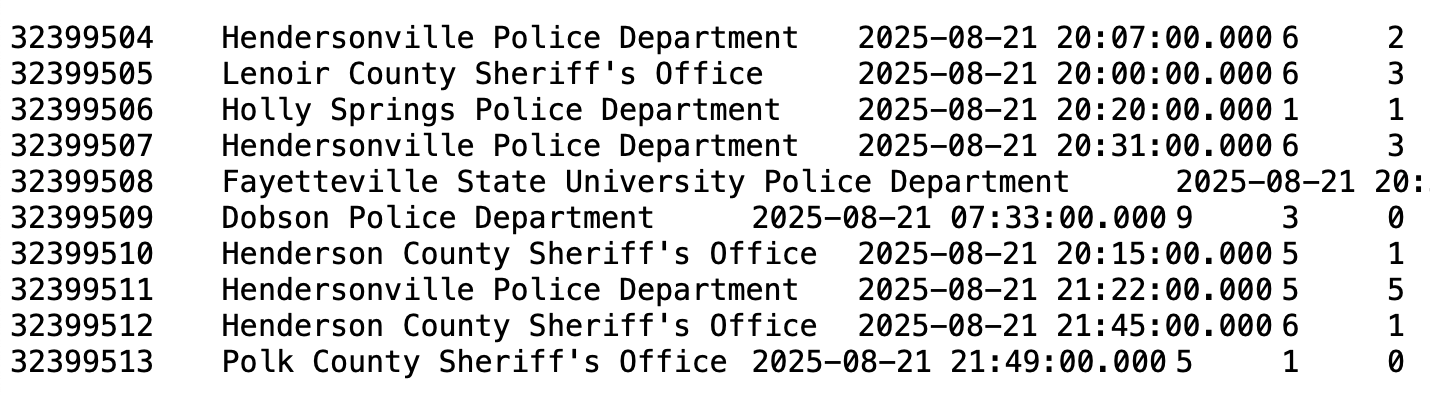
North Carolina collects data on every police traffic stop statewide, resulting in more than 32 million stops to date. This dataset, managed by the North Carolina State Bureau of Investigation, contains information that law enforcement agencies are required by North Carolina statute to report. Although it is self-reported, the reporting itself is mandatory. However, its large size and technical format makes it difficult for the public to access or understand.. The raw data cannot be opened or analyzed using common tools like Microsoft Excel. For communities, advocates, and attorneys seeking to view this data, the lack of accessible data becomes a serious barrier to meaningful analysis.
Forward Justice, a nonprofit advancing racial, social, and economic justice, wanted to change that. The organization envisioned a tool that would make this data understandable and usable by anyone, including community members, journalists, researchers, or policymakers. Working with Caktus Group, they successfully developed a public platform that enables easy access to North Carolina’s traffic stop data, empowering users to analyze law enforcement activity, promote accountability, and inform policy discussions.
Key challenges included:
- Processing and analyzing tens of millions of records efficiently
- Presenting complex, nuanced data in an accessible interface for non-technical users
- Ensuring transparency and accuracy through open-source technology
- Building a scalable, maintainable solution for ongoing (nightly) data updates
Solution
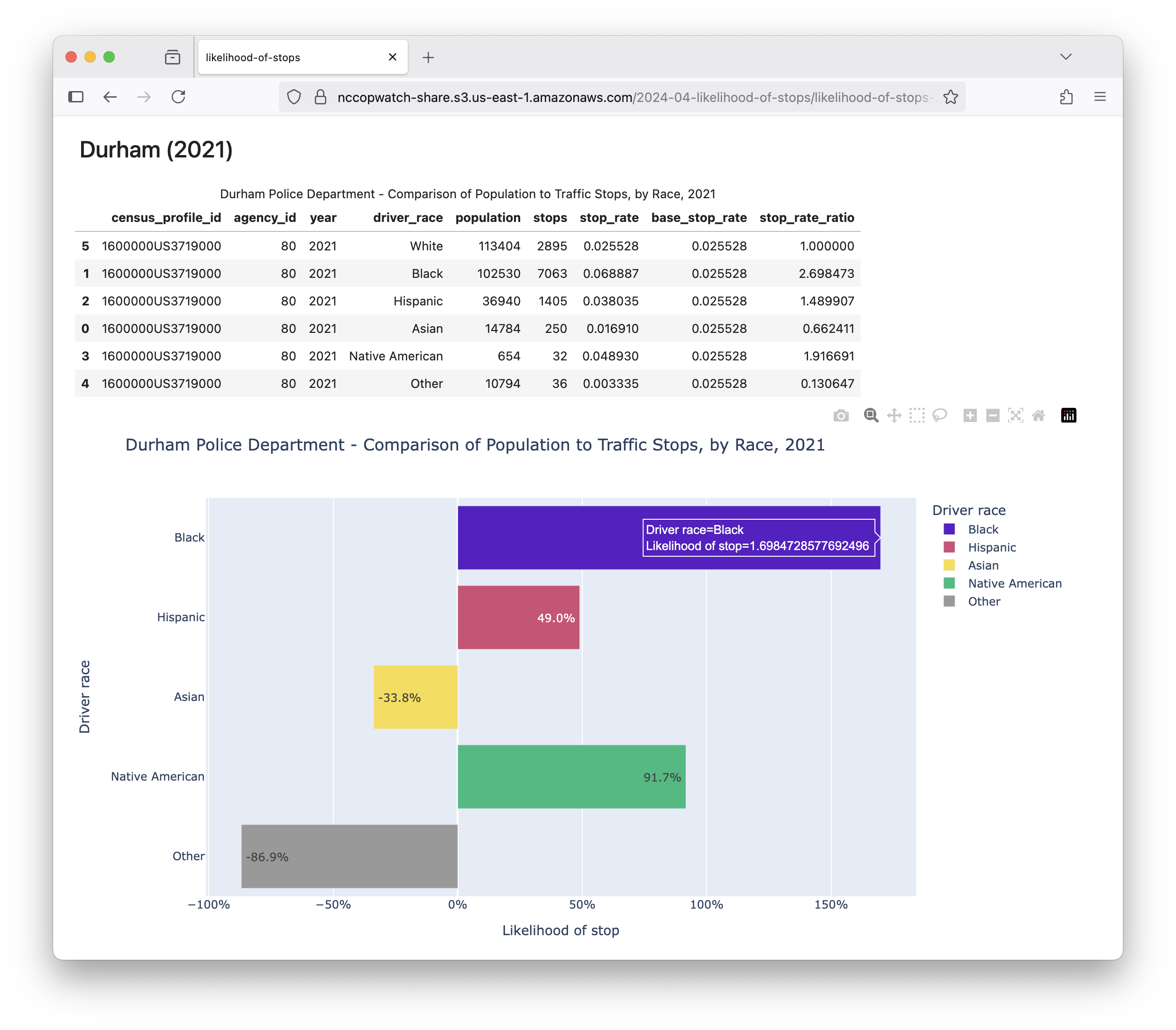
Caktus formed a close, strategic partnership with Forward Justice, working directly with attorney Whitley Carpenter to define the project’s goals and analyze the data. This hands-on collaboration involved using tools like Jupyter Notebooks and Pandas to explore the large dataset together, allowing the team to dissect the data and prototype visualizations to see what worked best before building them into the web app. The result was NC CopWatch, an open-source Django-based web application that transforms the state’s traffic stop database into a powerful, easy-to-use public resource.
Community-Centered Design
Through workshops and design sessions with community organizers and advocates, the team identified two core use cases:
- Proactive analysis: Tools to explore racial disparities and departmental patterns
- Responsive searches: Tools that let individuals find information about officers’ past stop patterns after an incident
The resulting interface allows users to search, filter, and visualize data intuitively without requiring technical expertise.
Collaborative Data Science
The team built upon the foundational research of Dr. Frank Baumgartner, author of Suspect Citizens. Whitley’s close partnership with Frank was helpful for guiding Caktus’s data science approach and providing feedback on ideas. This collaboration was key to developing new, community-relevant metrics using data analysis tools:
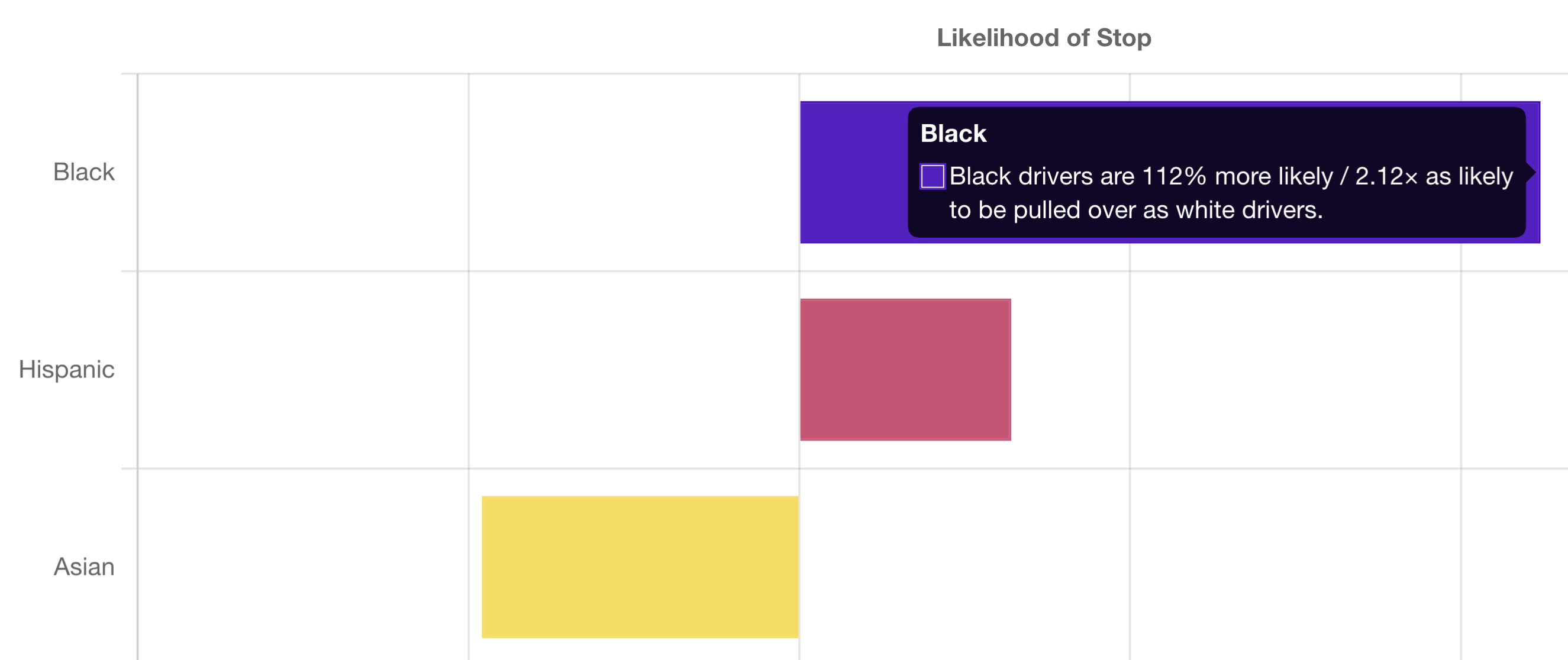
- Likelihood of Stop: Shows the statistical probability that a driver from a specific racial group will be pulled over by police. NC Copwatch uses this concept comparatively by calculating a “Stop Rate Ratio” to show this probability is not the same for everyone, measuring how much more or less likely Black or Hispanic drivers are to be stopped compared to white drivers.
- Stops Leading to Arrest: Shows the percentage of stops that result in arrests. Despite law enforcement claims that regulatory stops and equipment stops improve public safety, the data shows very few stops actually lead to arrest. This means these stops do little to prevent or solve crime, but instead often create unnecessary police contact, especially for black drivers who are stopped more frequently. Highlighting this data challenges the idea that these stops are a legitimate safety tool and underscores their role in overpolicing communities of color.
Technology and Scale
The NC CopWatch platform was built using Python and Django, enabling robust data management and fast querying of tens of millions of records. It is fully open source, hosted on GitHub, and designed to support future growth. Caktus developers optimized backend performance to support large-scale filtering and visualization while maintaining speed and responsiveness.
Results
NC CopWatch has become an essential resource for police accountability, legal advocacy, and community empowerment in North Carolina.
- Policy Reform: Supported policy changes, such as in Mecklenburg County, which ended regulatory offenses (e.g., window tinting, expired registration) as the sole basis for a traffic stop to reduce over-policing.
- Legal Advocacy: Used as evidence in court to demonstrate racial bias in enforcement patterns, contributing to rulings like State v. Johnson.
- Community Empowerment: Provided accessible public data used to train organizers and build advocacy toolkits.
- Transparency: Made over 32 million records fully searchable through a public-facing, open-source platform.
By combining legal expertise, technical innovation, and community partnership, Forward Justice and Caktus created a replicable model for data-driven justice. This project proves that when public data is made truly public, it can become a tool for systemic accountability and real-world change.